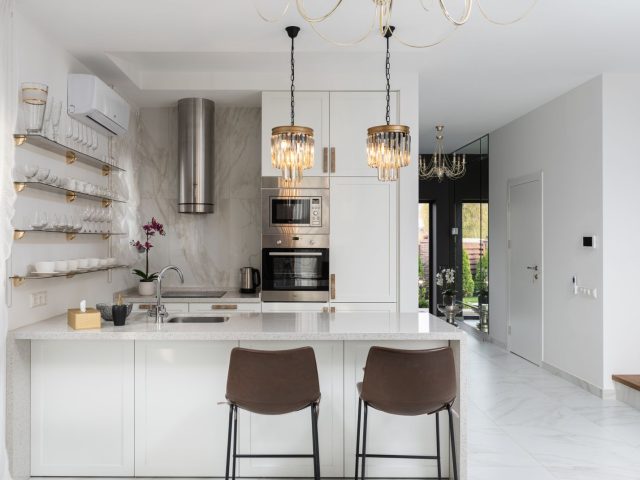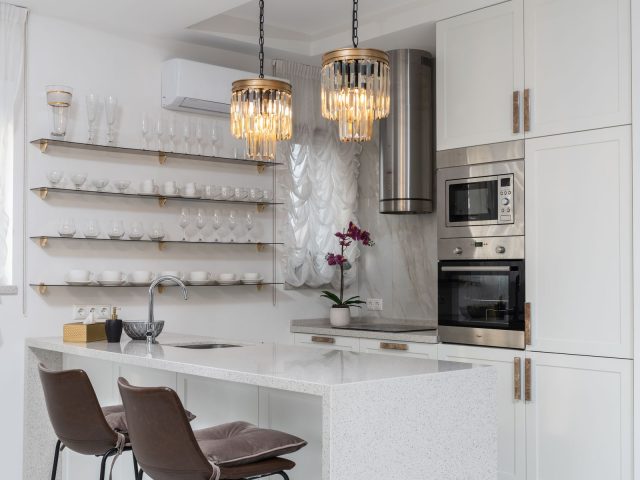

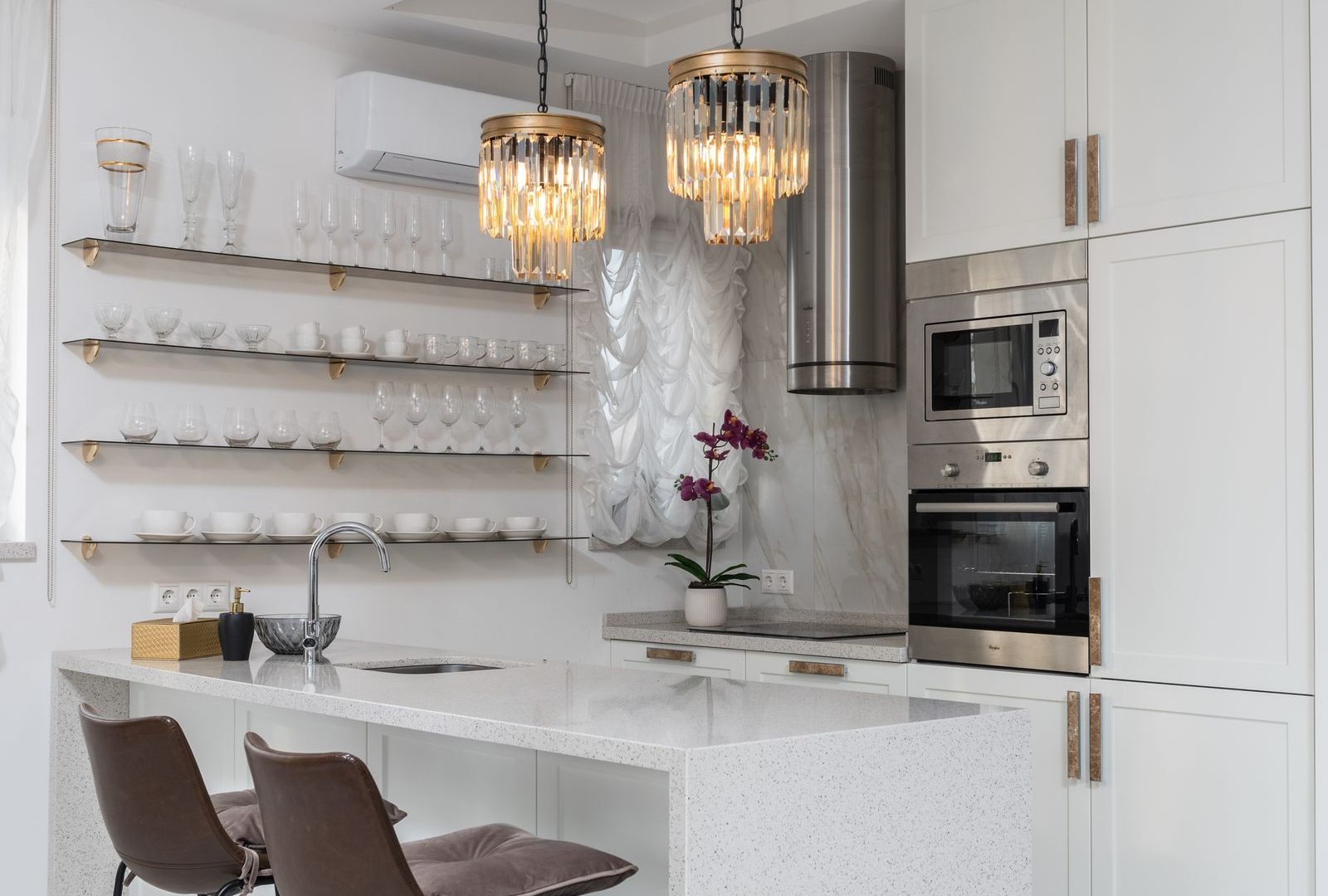
Kitchen countertops see more daily use than almost any other stone surface in a home — cutting, heat, spills, constant contact — which is why material and finish choice matters more here than almost anywhere else. We template, fabricate, and install kitchen counters as a complete service, from a single run to a full island with a waterfall edge.
What it covers
Countertop fabrication and installation for runs, islands, and peninsulas, backsplashes cut to match, sink and hob cutouts, and waterfall edges where the counter material wraps down the side of an island to the floor in a single visual run. We also handle seam placement planning for larger kitchens where one slab can’t cover the full run — deciding where a seam falls is as much a design decision as a technical one, and we plan it with you rather than defaulting to wherever it’s structurally easiest.
Who it’s for
Homeowners renovating a kitchen, whether that’s a full gut renovation or a countertop replacement inside an existing layout. Contractors and developers fitting out multiple kitchens in a residential project who need consistent quality across units. And architects specifying countertop material as part of a broader kitchen design.
How the process runs
- Consultation — layout, appliance and sink locations, and whether a waterfall edge or standard edge is wanted.
- Site measure and templating — taken after cabinets are installed and levelled, since countertop templates depend on the cabinets being in their final position.
- Material selection and seam planning — choosing slab and planning exactly where any seams will fall relative to the sink, hob, and sightlines from the main kitchen entry.
- Fabrication — cutting, edge profiling, and cutouts machined to appliance and sink templates.
- Dry-lay — for multi-piece counters, pieces are laid out together beforehand to confirm the seam and veining match before final fixing.
- Installation — set, levelled, seamed, and sealed on site.
Materials and options
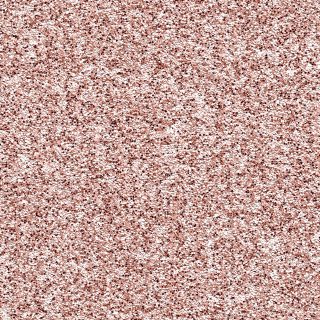
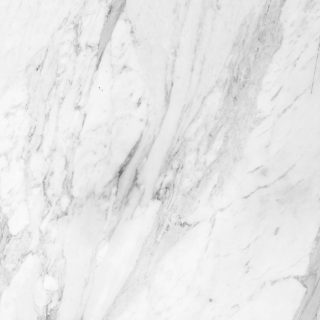
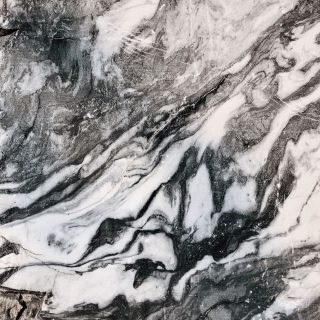
Granite and quartz are the two most common kitchen counter materials — granite for natural heat and scratch resistance, quartz (engineered, non-porous) where low maintenance matters more than natural variation. Marble is used too, mainly by clients who want the look and are comfortable sealing and caring for a more porous stone. Standard thickness is 20mm; 30mm is common for waterfall edges and islands where a heavier profile reads better. Edge profiles range from a simple eased edge to bullnose, ogee, and mitred waterfall edges. Undermount sinks are the more common choice for a clean countertop sightline; drop-in sinks remain an option where budget or a faster install matters more.
What it costs to get started
Kitchen counter pricing depends on material, total area, edge profile, and the number of cutouts — a granite run with a simple eased edge and one sink cutout costs meaningfully less than a quartz island with a full waterfall edge. Send us your layout, or book a site measure once cabinets are in, and we’ll quote against the actual job.